If you want a home that keeps daily errands, dining, and commuting within easy reach, townhome and condo living near the Mall of Georgia can be worth a close look. For many buyers, the appeal is not just the location. It is the mix of lower-maintenance living, attached-home options, and access to one of Buford’s biggest retail and entertainment hubs. If you are weighing whether this style of home fits your budget and lifestyle, this guide will help you sort through the basics. Let’s dive in.
Why this Buford area stands out
Buford is in Gwinnett County, about 25 miles north of Atlanta, with access to both I-85 and I-985. The Mall of Georgia, located at 3333 Buford Drive, is a major regional destination with more than 200 stores, dining options, and year-round events at the Village Amphitheatre. That means this area is built around convenience, activity, and easy regional access.
It is also helpful to know that the mall uses a Buford address, while Gwinnett County has described it as being in an unincorporated area near Buford. For you as a buyer, the practical takeaway is simple: when people talk about living near the Mall of Georgia, they usually mean the broader Buford-area retail corridor rather than a downtown setting.
Buford’s city materials also point to downtown Buford for local shops, restaurants, artists, and occasional Main Street festivals. So while the mall corridor is convenience-first, you are still close to a different kind of local experience if you want it.
Townhomes vs condos
Before you shop, it helps to understand what type of property you are actually considering. Condo and townhome living can feel similar from a lifestyle standpoint, but ownership and layout often differ.
What a condo means
A condo is an individual unit within a larger building or community. You own your unit, while common areas are shared with other owners in the community.
In many condo communities, association dues help cover exterior maintenance, common-area repairs, insurance for shared areas, and reserve funds. Depending on the community, amenities may also be part of that structure.
What a townhome means
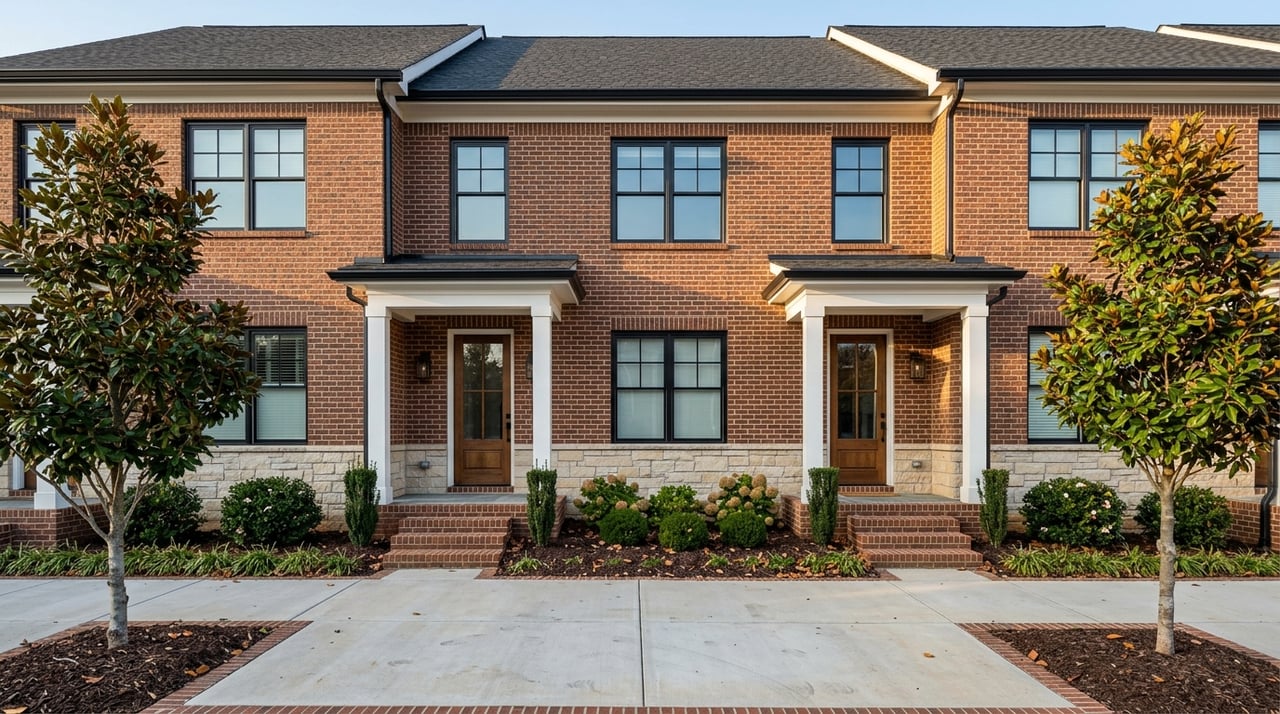
A townhome is usually a multi-floor home that shares one or two walls with another property. It typically has its own private entrance and often includes a private patio or deck.
Townhomes are often less expensive than single-family homes of similar size because they are built up rather than out. For many buyers, that makes them an appealing middle ground between a detached house and a condo.
Why buyers choose this lifestyle
The biggest draw for many buyers is lower exterior maintenance. If you do not want the full upkeep that can come with a detached home, a condo or townhome may give you a simpler day-to-day routine.
This can be especially attractive if you travel often, want a lock-and-leave setup, or simply prefer to spend less time on yard work and exterior repairs. Near the Mall of Georgia, that lower-maintenance lifestyle is paired with quick access to shopping, restaurants, and major roads.
The area also offers a mix of practical and recreational amenities. Nearby, the Gwinnett Environmental and Heritage Center sits on 233 wooded acres with trails and exhibits, and the Ivy Creek Greenway connects the center to the Mall of Georgia area. Buford’s city materials also highlight access to parks, healthcare, and Lake Lanier-area recreation.
What daily life feels like
Living near the Mall of Georgia is generally about convenience first. You are close to a regional shopping and dining center, major highways, and a busy suburban corridor that serves both local residents and visitors.
That does not necessarily mean an urban, walk-everywhere lifestyle. The area does have some transit support through Ride Gwinnett, including Route 50 serving Buford Mall of Georgia, Coolray Field, and Old Peachtree Road. Still, this is primarily a car-oriented area shaped by interstate and arterial-road access.
If your priority is quick errands, dining options, and easier commuting routes, that setup can be a strong fit. If you are hoping for a quieter, large-lot setting, this area may feel more active and commercially centered.
What to budget beyond price
One of the most important parts of buying a townhome or condo is looking beyond the list price. A lower purchase price does not always mean a lower monthly cost.
HOA dues matter
HOA or condo dues are usually paid separately to the association and are not normally included in your mortgage payment. Those dues can range from a few hundred dollars a month to more than one thousand dollars a month, so they should be treated as part of your real monthly housing cost.
If dues go unpaid, the association can pursue collection and even foreclosure. That is why it is important to understand both the amount and the rules before you make an offer.
Insurance can be different
Insurance for a condo can be more complex than insurance for a detached home. Association fees often include master insurance for common areas, but you still need insurance for the unit itself.
When you review affordability, make sure you are looking at the full picture, including mortgage payment, property taxes, homeowners insurance, and HOA dues. Those costs should be reflected in your Loan Estimate.
What to review before you make an offer
Due diligence matters even more in condos and townhomes because you are not only buying a home. You are also buying into a community structure with shared finances and rules.
Here are some key questions to ask:
- What are the monthly HOA or condo dues?
- What do those dues cover?
- Is there adequate reserve funding?
- Are there any special assessments now or being discussed?
- What is the parking situation?
- What does the master insurance policy cover?
- Are there rental restrictions or renter-friendly policies?
- Is the project warrantable for financing?
- Are there pending lawsuits or structural concerns?
Lenders may review the physical condition of the community, its financial stability, inspections, structural debt, lawsuits, and whether the project meets warrantable standards. That means the community itself can affect your financing options, not just your personal qualifications.
Who this area may fit best
Townhome and condo living near the Mall of Georgia can work well if your goals center on convenience and manageable upkeep. Buyers who value easy access to shopping, dining, and major roads often see real value in this part of the Buford area.
This type of home may also appeal if you want attached housing with less exterior maintenance than a detached property. Depending on the community, you may find it easier to balance homeownership with a busy work schedule, travel, or a relocation move.
The best fit comes down to your priorities. If you want a convenience-focused suburban setting with strong access to everyday amenities, this area deserves a spot on your list.
A smart search starts with the right questions, the right numbers, and a clear understanding of how each community operates. If you are exploring townhomes or condos near the Mall of Georgia and want local guidance on lifestyle, cost, and community fit, Amy Scott can help you make a confident move.
FAQs
Is the Mall of Georgia actually in Buford?
- The mall has a Buford address, and Gwinnett County has also described it as being in an unincorporated area near Buford.
What is the difference between a condo and a townhome?
- A condo is a unit in a larger community with shared common areas, while a townhome is usually a multi-floor attached home with its own entrance and often a patio or deck.
Are HOA dues included in a Buford condo or townhome mortgage payment?
- Usually not. HOA or condo dues are typically paid separately to the association rather than included in the monthly mortgage payment.
What should you ask before buying near the Mall of Georgia?
- Review dues, reserve funding, parking, special assessments, insurance coverage, rental rules, and whether the community is warrantable for financing.
Is the Mall of Georgia area walkable or car-oriented?
- The area has some transit service through Ride Gwinnett, but it is primarily car-oriented because it is built around major interstate and arterial-road access.