When the lights go out around Lake Lanier, do you have a plan? Between fast-moving summer storms and the occasional tropical system, outages and fallen limbs are a fact of lake living. You want your home safe, your family comfortable, and your investment protected. In this guide, you’ll learn practical backup power options, essential generator safety, smart tree care, and where to check permits and local resources. Let’s dive in.
Why Lanier homeowners should prepare
Lake Lanier touches multiple counties with a mix of lakefront and semi-rural homes, which can see varied utility service and outage patterns across the shoreline communities. For quick local context, review the lake’s county footprint from the Lake Lanier Association. Strong thunderstorms and inland-tracking tropical systems bring wind, limbs, and debris that often cause outages.
Tree impacts are a leading cause of power interruptions and restoration delays. Georgia Power’s vegetation management guidance highlights how trees near lines drive many service issues. Reducing tree risk and planning backup power are the two most effective steps you can take.
Choose backup power
Your options fall into three main categories. Each can work well if you size it correctly and follow safety rules.
Portable generators: pros and safety
Portable units are budget-friendly and great for a few essentials like a fridge, lights, or a well pump. You refuel them manually and plug in selected loads or a dedicated inlet.
- Safety first: run portables outdoors, at least 20 feet from the home, with exhaust pointed away from doors and windows. Install carbon monoxide alarms on every level. The CPSC warns about lethal CO risks.
- Never backfeed through a wall outlet. Use a listed transfer switch or interlock installed by a licensed electrician. See NEC guidance summarized by EC&M on transfer equipment.
Standby generators: permits and fuel
Standby systems are permanently installed, start automatically, and can power most or all of your home, depending on size. Most run on natural gas or propane and use an automatic transfer switch.
- Permits and inspections are required. Hall County outlines the process on its Building Inspections page. Forsyth and other counties follow similar steps. Plan on electrical and gas/mechanical permits and final inspections.
- Coordinate fuel early. For propane, discuss tank sizing and siting with your provider and local fire officials. Confirm delivery plans during extended outages.
Battery storage: quiet resilience
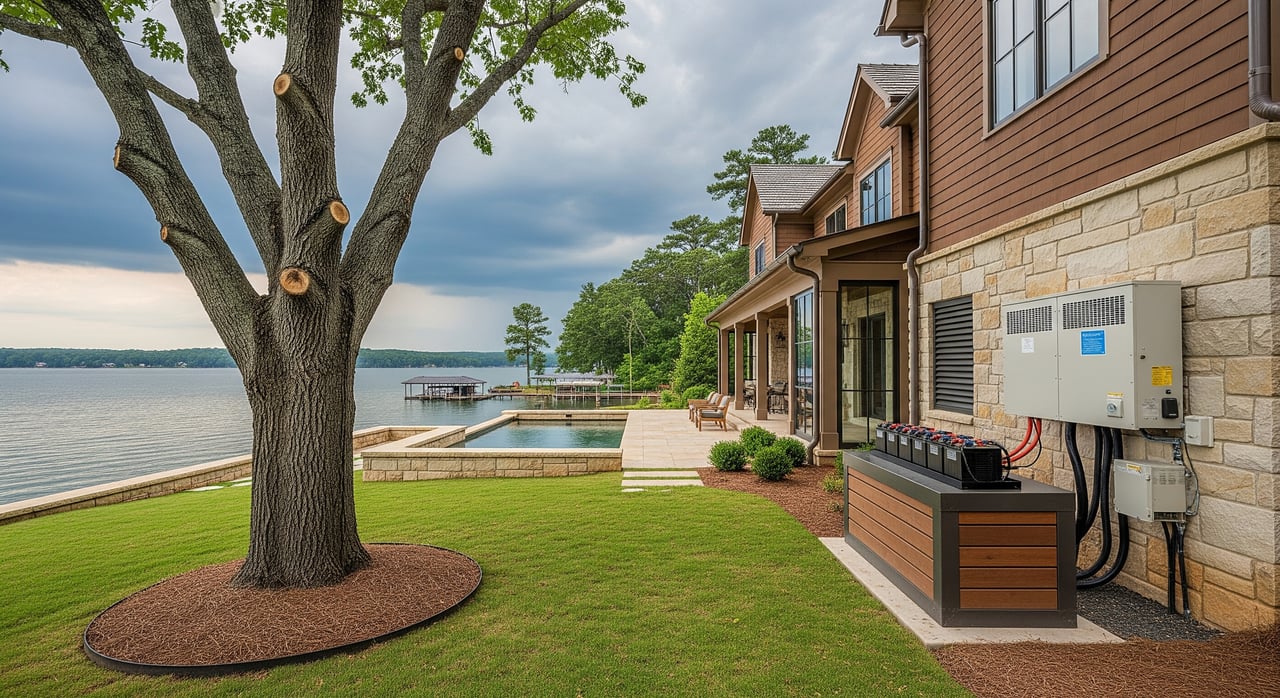
Battery systems can power critical circuits without noise or on-site emissions. They work especially well when paired with rooftop solar to recharge during the day. The NYSERDA homeowner guide to energy storage explains benefits, code basics, and interconnection considerations.
- Batteries are ideal for essential loads and shorter outages. Whole-home backup may require larger systems and careful design.
- Work with qualified installers who handle permits and utility interconnection paperwork.
Sizing, cost, and runtime
Start by listing must-have loads: medical devices, well or sump pump, refrigeration, Wi-Fi, and heating or cooling. That list drives your kW and kWh needs.
- Typical cost ranges: portable units often a few hundred to a few thousand dollars; installed standby systems commonly run in the mid four to low five figures depending on size and site work. See industry ranges via HomeGuide’s cost overview.
- Runtime varies by fuel and load. Natural gas standby systems can run as long as supply is available; propane runtime depends on tank size; portable gasoline units need frequent refueling.
- Get at least three local quotes that include transfer equipment, permits, and inspections.
Tree safety around Lake Lanier
Trees near homes and driveways pose the greatest risk during storms. A pre-storm assessment is one of the highest-return steps you can take.
Pre-storm inspection and pruning
- Hire a qualified arborist to evaluate large or compromised trees near your roof, septic, service drops, or access roads. The UGA Extension’s storm tree guide recommends removing dead or structurally unsound trees first.
- Focus on structural pruning, not topping. Train young trees early for better wind resistance. Schedule major, non-urgent pruning in the dormant season when possible.
- Avoid do-it-yourself work near power lines. Report line hazards to your utility for safe removal by trained crews.
After-storm cleanup priorities
- Treat hanging limbs and partially uprooted trees as hazardous. Call professionals if a tree is leaning on a structure or lines.
- In many cases, experts advise addressing immediate hazards now and waiting 6 to 12 months before major restorative pruning to see if trees recover.
Local permits, utilities, and resources
Use these starting points to plan and stay informed:
- Permits and inspections: Hall County Building Inspections. Forsyth and Gwinnett provide similar online portals and inspection steps.
- Outage reporting: Jackson EMC’s Report an Outage portal. Check your bill to confirm your utility if you are served by Georgia Power or another local co-op.
- Tree care education: UGA Extension and GFC publish homeowner guidance on assessing and recovering storm-damaged trees.
Step-by-step storm-ready checklist
- Define critical loads and pick your backup type: portable, standby, or battery.
- Confirm permits with your county and include a listed transfer switch in any home-wired setup.
- Install CO and smoke alarms with battery backup. Test them monthly.
- Arrange fuel logistics: natural gas supply checks or propane tank size and delivery plan.
- Book a certified arborist for a pre-storm tree assessment and targeted pruning.
- Photograph your property and trees for baseline documentation.
- Save utility outage numbers and sign up for alerts. Share a simple neighborhood check-in plan.
Insurance basics for wind and flood
Standard homeowners policies typically address wind-driven damage, but they do not cover flooding. If you need flood coverage, it is a separate policy, usually with a 30-day waiting period. Learn more via FEMA’s flood insurance overview. If you live near the lake or in a mapped flood zone, review coverage well before storm season.
Ready to storm-proof your move or prep your property before listing? If you want a practical plan for backup power and tree safety as part of your Lake Lanier buying or selling strategy, let’s talk. Connect with Amy Scott for local guidance that protects your comfort and your home’s value.
FAQs
Do I need a permit for a standby generator?
- Yes. Expect electrical and gas/mechanical permits plus inspections. Check your county’s process before you buy.
How far from the house should I run a portable generator?
- At least 20 feet away, with exhaust pointed from doors, windows, and vents. Always use working CO alarms.
Can I power the whole house with a portable generator through an outlet?
- No. Backfeeding is dangerous and often illegal. Use a listed transfer switch or interlock installed by a licensed electrician.
What size backup system do I need?
- List your must-have loads first, then size the system to those needs. Many homeowners start with refrigeration, well or sump pumps, Wi-Fi, lighting, and climate control.
Should I remove trees before storm season?
- Remove dead, diseased, or clearly hazardous trees near structures now. For borderline cases, address immediate risks and consult an arborist on timing for restorative work.